Three questions come up again and again: Why does a little mud matter? Why ask for public records? And why does any of this matter beyond one neighborhood? This page answers all three, and Part 4 covers what to do if someone sues you for speaking up.
Jump to: Part 1: Our water · Part 2: Public records · Part 3: Transparency across Arkansas · Part 4: Your right to speak up
Part 1: Our water
A little mud on the road. A gray stain at the curb. It’s easy to think it’s no big deal. This page explains, in plain language and with official sources, what these materials do once they leave a construction site, and why even small amounts add up.
This page is general public education. It describes what these materials do in general. It is not a claim about any particular site, person or company.
Jump to: Where the water goes · Sediment · Concrete washout · Pipes, ponds and streets · Our drinking water · What good controls look like · What you can do · Videos · Sources
Where the water goes
Storm drains are not sewers. The grate at the curb is not connected to a treatment plant. Whatever washes into it (rain, mud, concrete washout, oil) flows untreated through pipes, ditches and ponds to the nearest creek.
In the Elkins area, those creeks drain to the White River, which flows into Beaver Lake, the drinking water source for much of Northwest Arkansas.
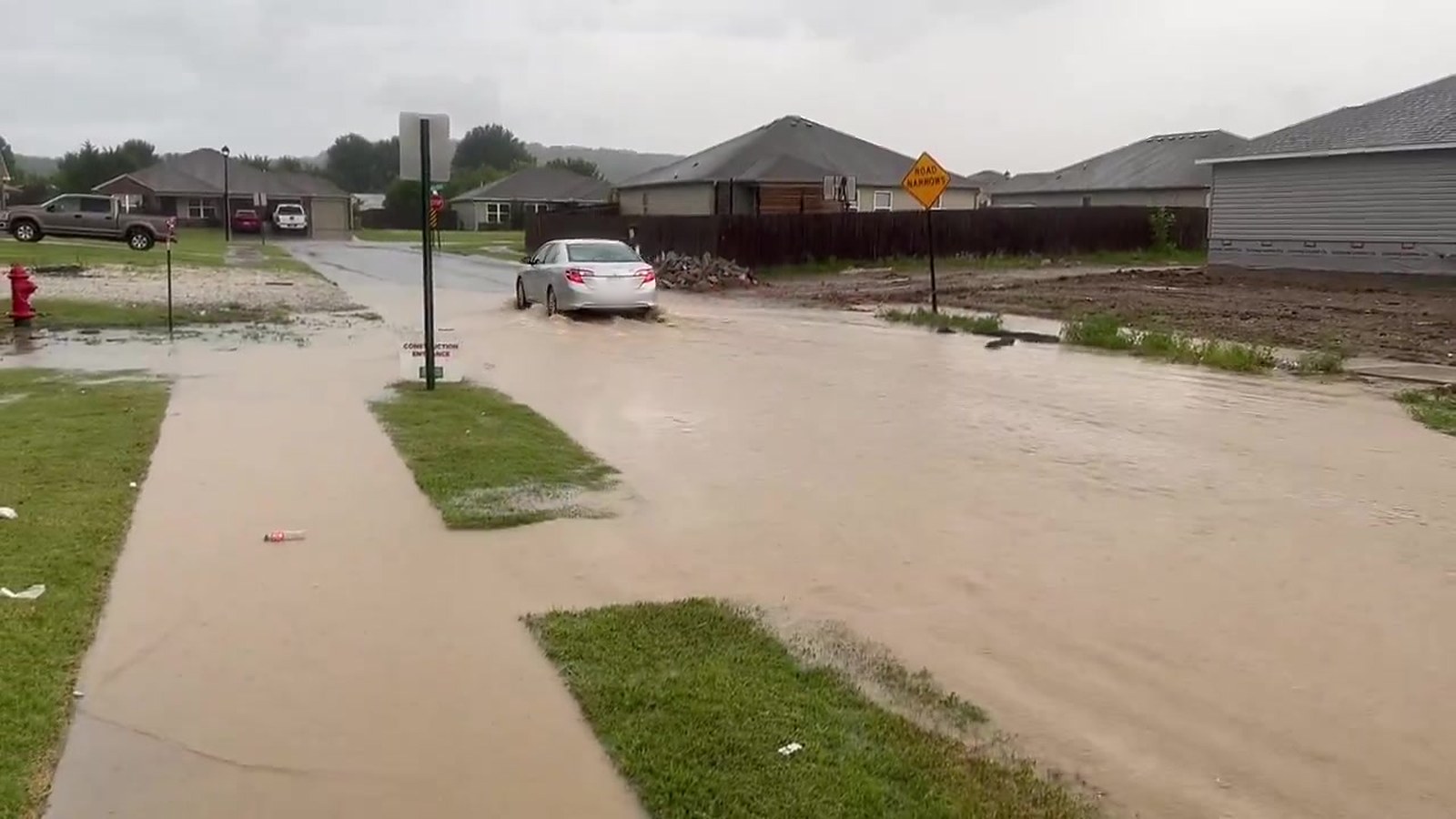
Sediment (mud and dirt)
According to the U.S. EPA, sediment is the primary pollutant of concern in stormwater runoff from construction sites. Once vegetation is stripped and soil is bare, rain moves it easily. EPA reports that sediment runoff from construction sites is typically 10 to 20 times greater than from farmland and 1,000 to 2,000 times greater than from forest.
- In creeks and lakes: muddy water blocks sunlight from aquatic plants, clogs fish gills and smothers the gravel beds where fish lay eggs.
- In the system: sediment settles in inlets, pipes and detention ponds and takes up the space meant for stormwater.
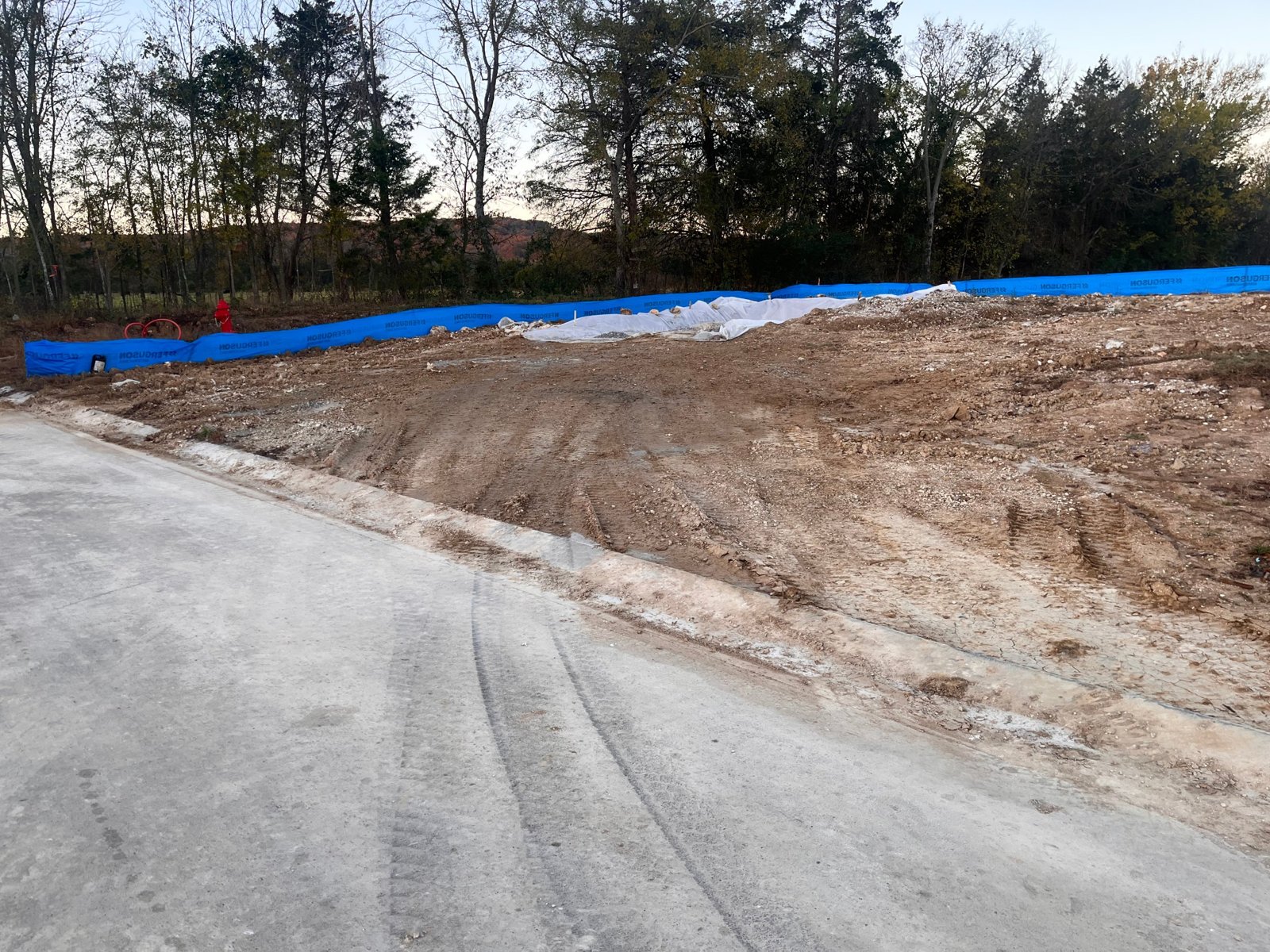
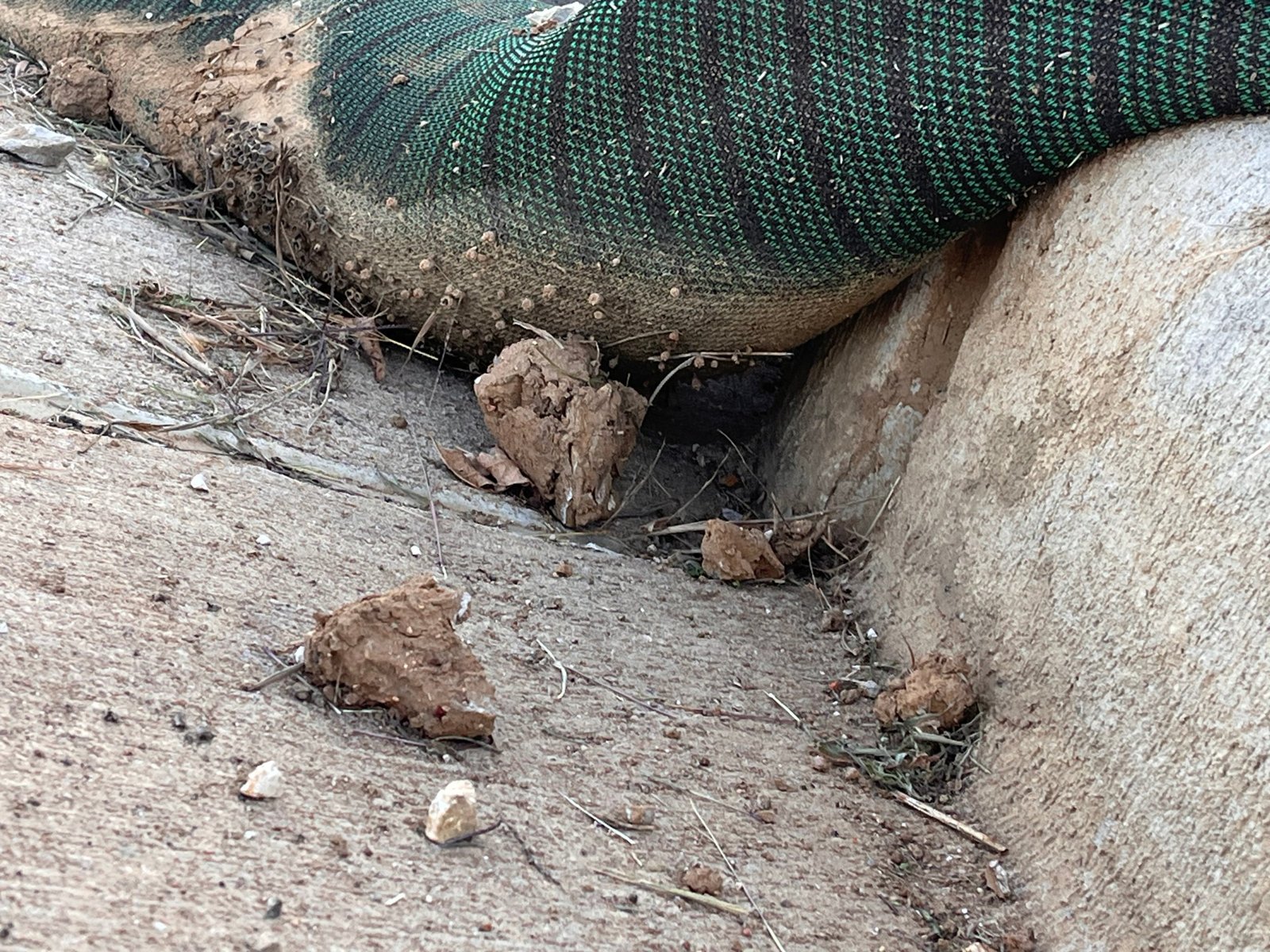
Concrete washout
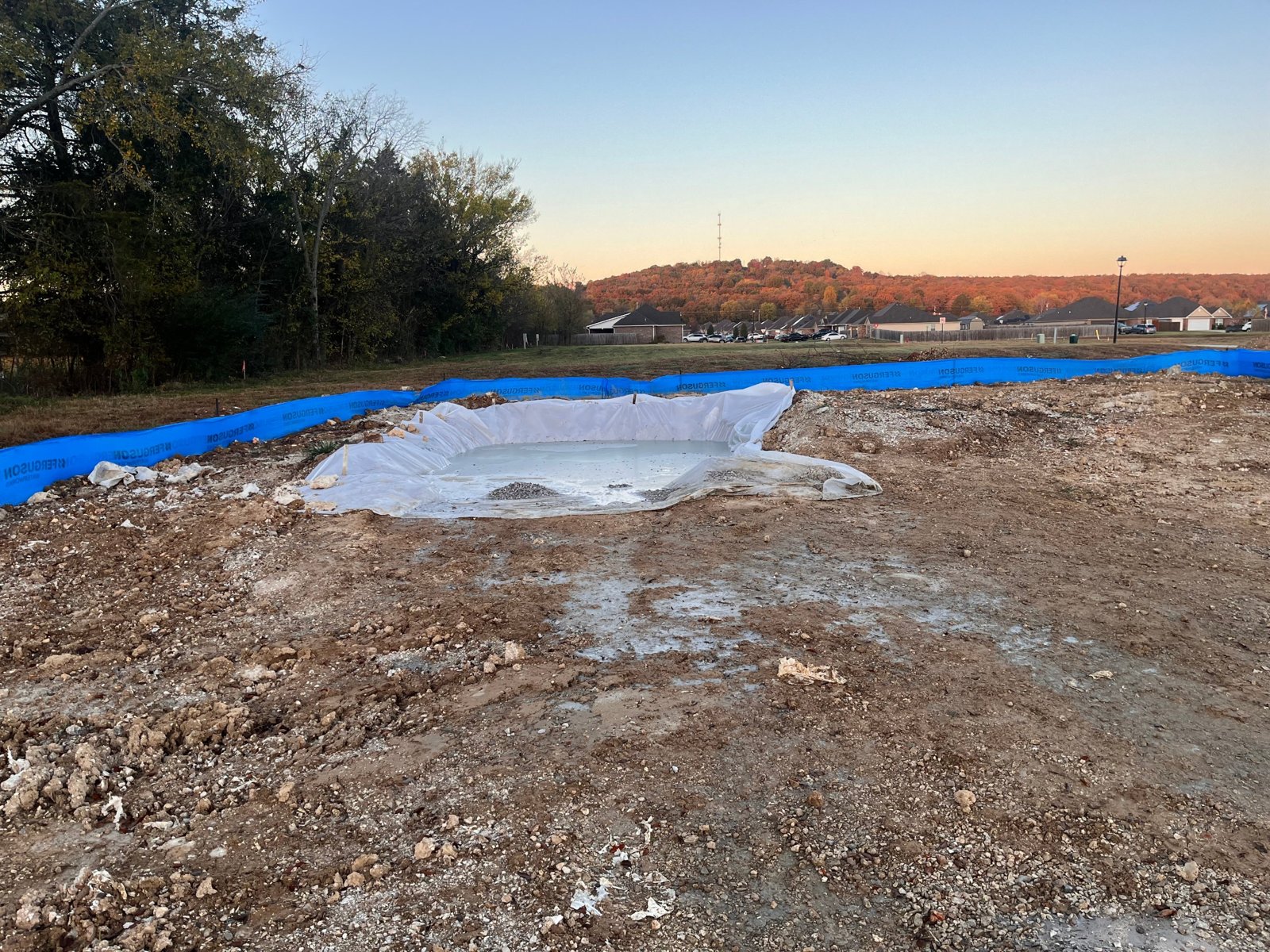
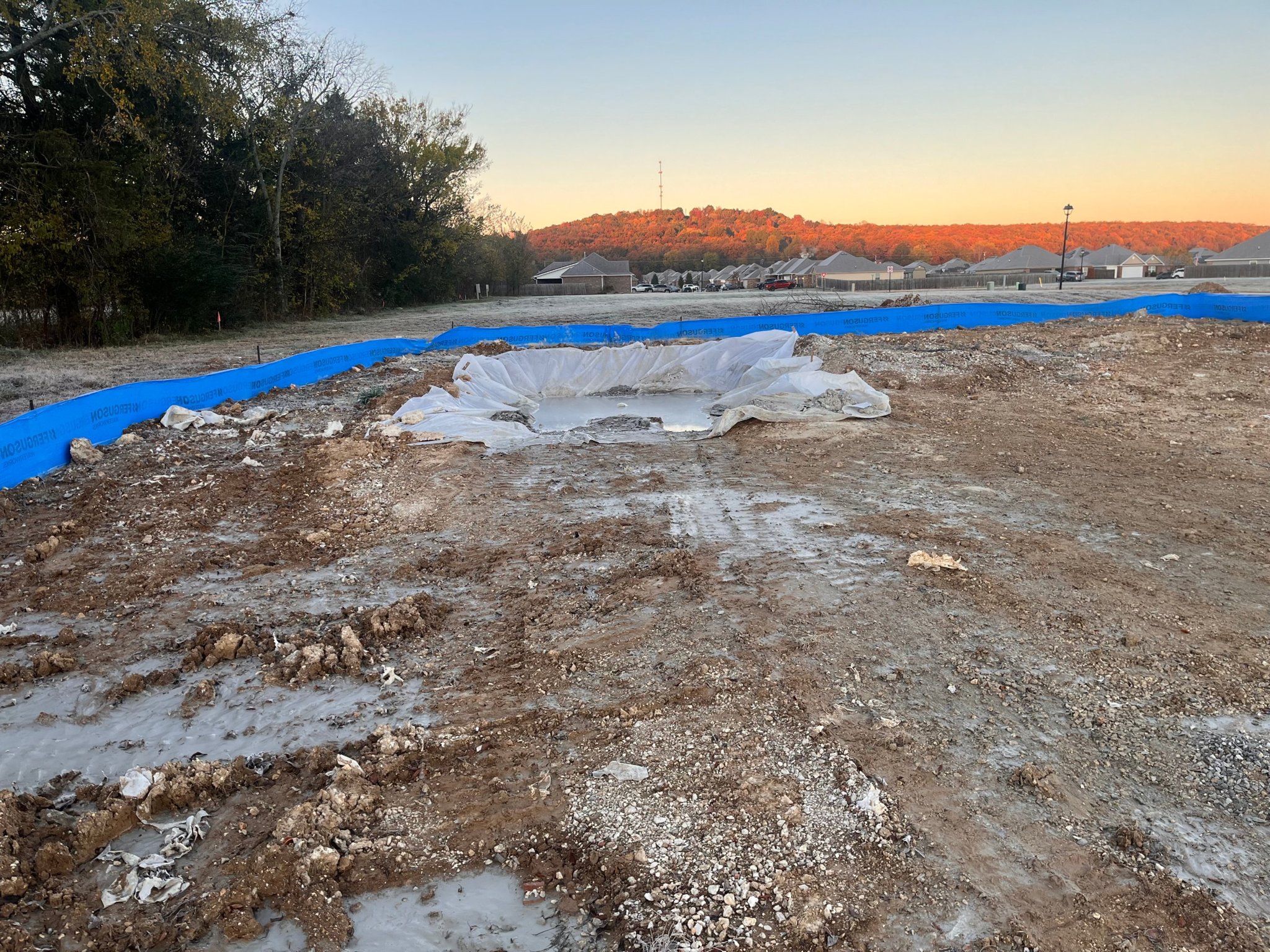
Concrete washout is the gray-white slurry left when concrete trucks, chutes, pumps and tools are rinsed. According to the U.S. EPA, it contains toxic metals and is caustic and corrosive, with a pH near 12. For comparison, liquid drain cleaner is about 13.5.
- It can harm fish gills and eyes and interfere with reproduction.
- The safe pH range for freshwater aquatic life is about 6.5 to 9.
- It can carry metals such as chromium and copper, and it can soak into soil and groundwater.
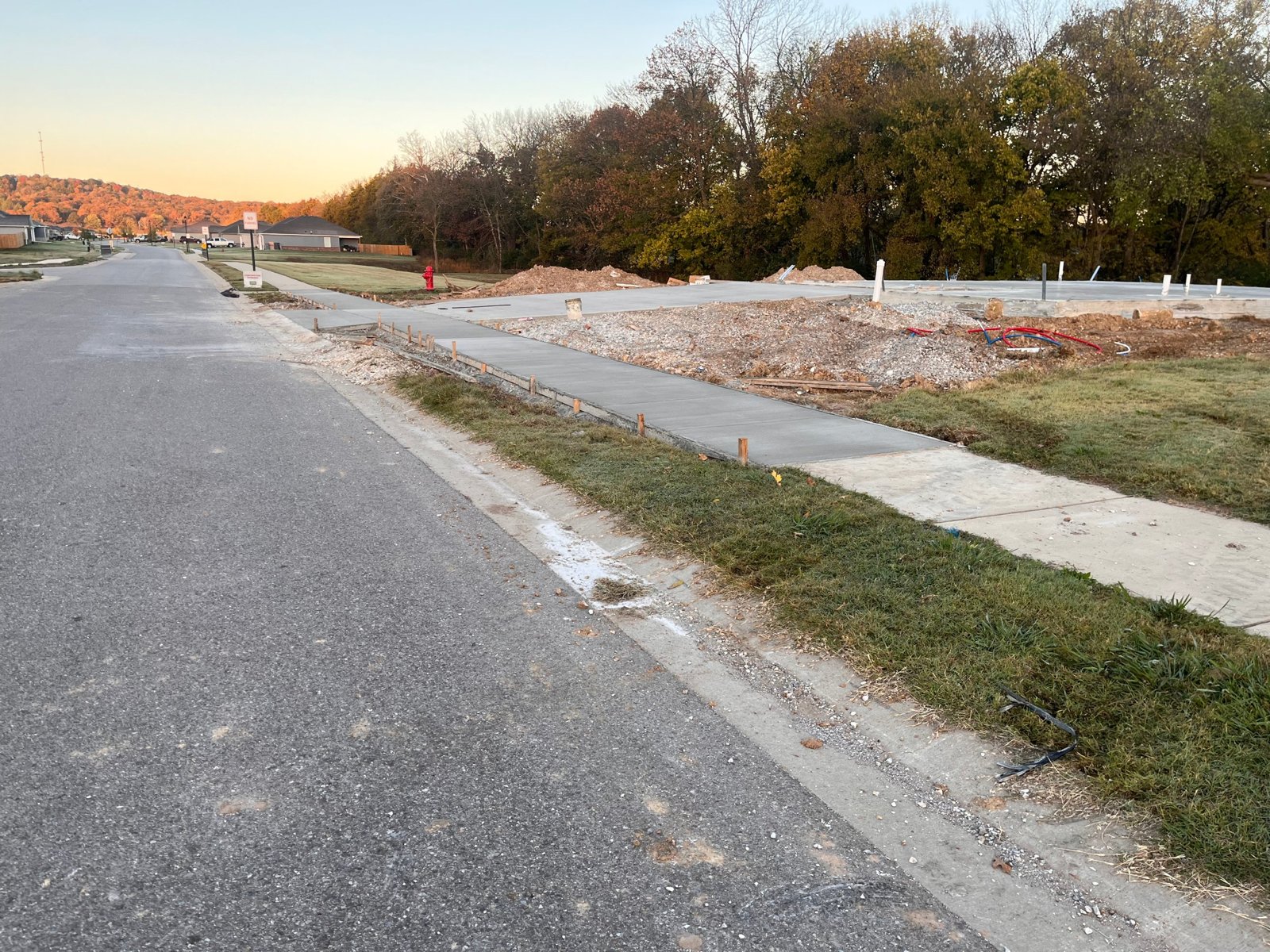
Why “just a little” still matters
- It doesn’t take much to make a lot. Rinsing one truck chute produces about 7 gallons of washout; rinsing a pump truck hopper, about 50.
- pH is a 10× scale. Each step up is ten times stronger. pH 12 is about 1,000 times more alkaline than pH 9, the upper limit for fish.
- Dilution takes a lot of water. By simple dilution math, bringing 1 gallon of pH-12 washout down to pH 9 takes roughly 1,000 gallons of clean water. One 7-gallon chute rinse would need about 7,000. (Estimate based on EPA pH values; real-world chemistry varies.)
That is why construction stormwater permits require a contained, lined washout area, and why EPA guidance says washout areas should be at least 50 feet from storm drains, open ditches and waterbodies.
Pipes, ponds and streets: the public cost
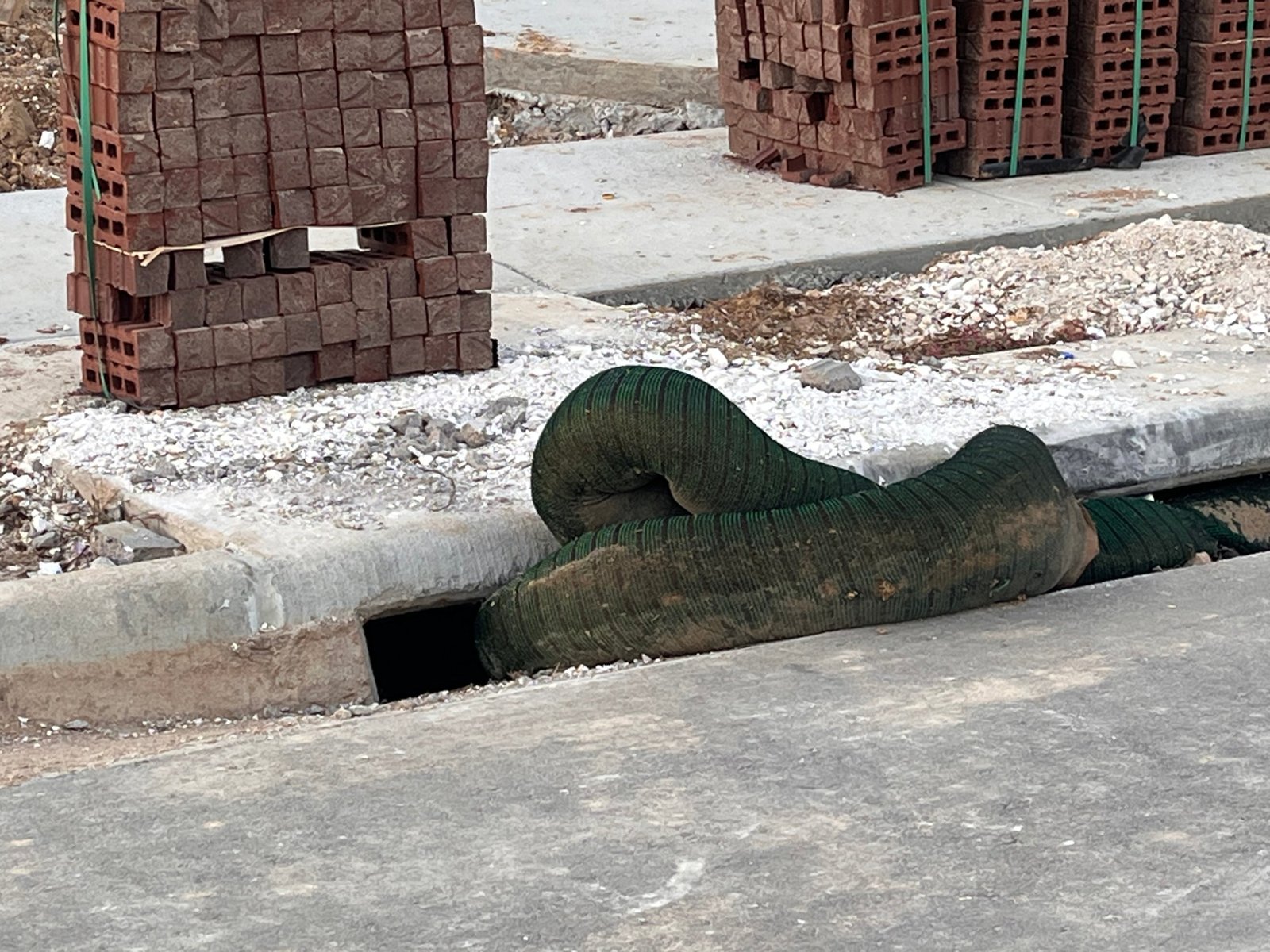
Storm pipes, inlets and detention ponds are public infrastructure. They’re sized to carry a certain amount of rain. Anything that takes up that space means less room for water during a storm, which can back water up onto streets and yards.
- Sediment settles in inlets, pipes and ponds. Removing it is ongoing public maintenance.
- Concrete washout can harden inside the storm system, layer by layer. Hardened concrete can’t be flushed out; it has to be cut or dug out.
- Real examples: in Seattle, concrete blocked 70 feet of a city pipe, and replacing it meant digging up the street, at an estimated cost of about $350,000. In the UK, Thames Water estimates it spends about £1.6 million every year clearing hardened concrete from its pipes.
When public pipes and ponds have to be cleaned, repaired or replaced, the cost usually falls on taxpayers and ratepayers.
Our drinking water
Beaver Lake supplies drinking water across Northwest Arkansas and beyond. The University of Arkansas Cooperative Extension Service says it provides water to one of every seven Arkansans, and Beaver Water District has described it as serving one out of every five. Either way, what washes off the land upstream ends up in the water that utilities have to treat.
What good controls look like
None of this requires expensive technology. Standard practices keep these materials on the site, as long as they’re installed, inspected and repaired:
- Silt fence along the low edges of disturbed ground, standing upright and buried at the bottom.
- Inlet protection (socks, wattles or filters) at curb inlets, in place and not overflowing.
- Rock construction entrance so trucks don’t track mud into the street.
- Lined concrete washout pit or container, at least 50 feet from drains and ditches, not overflowing.
- Seeding or cover on bare ground as soon as work allows.
What you can do
- Document it from public property. Take a photo or short video with the date, time and location. Don’t go onto private property or a construction site.
- Report it to Arkansas DEQ. Use DEQ’s pollution complaint tools: adeq.state.ar.us. Choose “Water” as the complaint type.
- Tell your city. Cities that operate storm sewer systems have their own responsibilities for construction runoff.
- Share what you learn. Most people simply don’t know what washout or sediment does.
Short videos
In this video: Eight months of rain at a subdivision construction site in Elkins, April to November 2026, set beside four Arkansas DEQ inspections (April 20, July 2, Aug. 25 and Oct. 8). Inspectors noted silt fencing down and undercut, storm drain inlet filters not installed or maintained, and concrete washout that was not maintained. On Nov. 10, DEQ found the response to its fourth notice inadequate and set a Nov. 23 deadline. Resident photos show muddy runoff in the streets and inlet protection buried in sediment.
In this video: Dee the beaver follows runoff from a construction site to a storm drain, through pipes with no treatment, to the creek and Beaver Lake, the drinking water source for about 1 in 7 Arkansans. It covers what sediment and concrete washout do to fish and pipes, the simple fixes (silt fence, inlet protection, lined washout pits, rock entrances), and how to report mud or washout to Arkansas DEQ.
In this video: A homeowner’s view of where the mud goes when it rains, with resident footage of brown water filling the street and pooling at a storm drain inlet. It explains that construction sites are required to keep mud out of storm drains, how permit fees, home sales and engineering review fit together, and why homeowners and taxpayers end up paying when the work isn’t done right. General information, not a claim that any person or company broke the law.
Sources
- U.S. EPA, Stormwater Best Management Practice: Concrete Washout (EPA 833-F-11-006)
- U.S. EPA, Stormwater Phase II Final Rule Fact Sheet 2.6: Construction Site Runoff Control
- Construction Industry Compliance Assistance Center, Process Wastewater: Concrete Washout Water
- Chattanooga–Hamilton County Water Quality Program, BMP Manual 6.1: Concrete Washout
- Clark County, NV Water Quality, Concrete Washout Best Management Practices
- City of Gig Harbor, WA, Concrete washout guidance
- Construction Dive, Seattle Public Utilities: concrete dumped into sewer pipe
- Thames Water, Buried beneath our streets (July 2026)
- University of Arkansas Cooperative Extension Service, FSA-9513: Beaver Lake
- Beaver Water District, The Double-Edged Sword (CEO message)
- Arkansas DEQ, Web-based Environmental Applications (pollution complaints)
Disclaimer: This page is provided for general public education. It summarizes publicly available information from the sources listed. It does not allege that any specific person, company or agency has violated any law. Photos and videos elsewhere on this site are resident documentation from public vantage points.
Part 2: Why public records matter
Watch: Why FOIA Matters
In this video: How Arkansas FOIA is supposed to work (ask, three working days, go to court if denied), and how one resident’s records requests to the City of Elkins about drainage on one property became three cases in Washington County Circuit Court. It walks through the dates from April 2 to the Dec. 8 hearing and notes that the City’s attorneys are paid with public money. The cases are pending; no court has ruled.
Public records belong to the public. Arkansas’s Freedom of Information Act (FOIA) is one of the oldest open-records laws in the country. It lets any Arkansas citizen see what their government is doing, without a lawyer and without having to explain why.
Jump to: How this started · What FOIA can do for you · How it works · Records this project has requested · When it doesn’t work · Who pays · File your own request · Sources
How this started
This project didn’t start as a campaign against anyone. It started with questions, and each answer led to the next one.
- It started with one home. Questions about grading and drainage on a newly built house led to the first records request, in April 2026.
- Then the neighborhood started watching. Residents documented muddy runoff and concrete washout leaving construction sites and reported it to Arkansas DEQ. State inspections found potential non-compliance every time (see Stormwater Compliance). That led to a June request for the City’s stormwater records.
- Then research turned up a moratorium. While reviewing those records, a 2016 building moratorium tied to drainage and detention ponds came to light, along with the conditions required to lift it (see Moratorium Timeline). That led to a July request.
One question led to the next. Every one is about drainage, flooding and runoff that affect the whole neighborhood, and Beaver Lake downstream. The same questions apply in any growing community, which is why this project also requests records from other cities and from the state.
What FOIA can do for you
FOIA isn’t just for reporters or lawsuits. Residents use it every day to answer ordinary questions:
- What was approved next door? Plats, permits, drainage plans and engineering reviews for a new subdivision or building.
- What did the inspector find? Inspection reports, complaints and correspondence about a construction site, a road or a business.
- Why did my bill change? Utility billing records, rate decisions and complaint logs.
- How is public money being spent? Contracts, invoices, bonds and payments.
- Who decided? Meeting minutes, votes, ordinances and the emails behind them.
Records show how decisions were actually made. When they’re available promptly and completely, residents can check their government in time for it to matter.
How Arkansas FOIA is supposed to work
- Ask. Any Arkansas citizen can request public records, in writing, by email or in person.
- Get the records, usually right away. Records are open during regular business hours. If a record is in active use or storage, the custodian must certify that in writing and set a date and time within three working days when it will be available.
- If you’re denied, go to court. A citizen denied FOIA rights can appeal to circuit court, which must set a hearing within seven days of a written application.
- Fees. A requester who prevails can recover reasonable attorney’s fees and costs from most government defendants, including cities.
Records this project has requested
This project uses FOIA with several agencies, not just one city. Most requests work the way the law intends. Some take patience.
- Arkansas Division of Environmental Quality (DEQ): construction stormwater complaint and inspection records, alongside DEQ’s public SEEK database. These records are the backbone of the Stormwater Compliance page.
- City of Harrison: water billing and citywide complaint records. It took follow-up, but the City provided the records. Thank you to the City of Harrison. Read the City’s written answers (PDF). See Harrison Water Records.
- City of Elkins: subdivision, stormwater and building moratorium records. Some records were provided; disputes over others are now before the circuit court (see below).
When it doesn’t work
When a requester believes records are missing and the questions can’t be resolved directly, the law’s remedy is circuit court. That is where three Elkins requests from 2026 now stand: three enforcement cases in Washington County Circuit Court, with a hearing set for December 8, 2026. The requester contends the City’s searches and productions were incomplete; the City disputes that and has asked the Court to deny the requester’s motions and award the City its costs and attorney’s fees. The Court will decide.
Every filing and date, with documents: FOIA Litigation Center.
Who pays for a records fight?
A city’s attorneys are paid with public money, and under Arkansas FOIA a requester who wins can also recover reasonable fees and costs from a city. Records disputes that end up in court are paid for, at least in part, by taxpayers. That’s one more reason complete, timely responses matter to everyone, not just the person who asked.
What any records dispute costs is itself a public record. Legal invoices and payments can be requested under FOIA.
File your own request
You don’t need a lawyer to ask for public records. Our FOIA Resource Center explains how to write a clear, specific request, what to expect, and what to do if you don’t get a response. Tips: be specific, keep it polite, put it in writing, and keep copies of everything.
Sources
- Ark. Code Ann. § 25-19-105, Examination and copying of public records
- Ark. Code Ann. § 25-19-107, appeal from denial of rights; attorney’s fees and costs
- Ballotpedia, Arkansas FOIA procedures
- Court filings in Washington County Circuit Court cases 72CV-26-2120, 72CV-26-3999 and 72CV-26-4000 (see the FOIA Litigation Center)
Disclaimer: This page is general public education. The court cases mentioned are pending; no court has ruled, and the City of Elkins disputes the requester’s claims. Nothing here alleges any criminal conduct by any person. This is not legal advice.
Part 3: Transparency across Arkansas
Five recent cases from Washington and Boone counties. Each one is in the public record: state audits, court filings, Medical Board findings and police standards records. When we ask for those records and read them, government works better for everyone.
In this video: Five cases from Washington and Boone counties, all in the public record: missing county money in Boone County, ivermectin given to Washington County jail detainees without consent, a former Prairie Grove officer the police chief asked the state to decertify, a death in custody in West Fork, and a county meeting the public couldn’t attend, where a resident sued under the Arkansas FOIA and won on appeal. Charges are accusations; anyone charged is presumed innocent.
The five cases
- Boone County, missing county money (2025–26). A state audit found a county employee stole from several county accounts. The former emergency management director is charged and pleaded not guilty. The former County Judge, charged for not reporting the card misuse, resigned in March 2026 and signed a plea deal in November that awaits a judge’s approval. The County Assessor, charged with a misdemeanor over a county purchase card, resigned in November 2026.
- Washington County Jail, medicine without consent (2021–23). Detainees sick with COVID were given ivermectin; a federal civil-rights suit said they were never told. The state Medical Board found no ivermectin-specific consent forms signed. The case settled with no admission of wrongdoing.
- Prairie Grove, an officer’s word in question (2024–25). The police chief asked the state to decertify a former officer, saying she lied multiple times. She consented to decertification without a hearing in November 2025.
- West Fork, a death in custody (2022–25). The officer was charged with negligent homicide, acquitted by a jury in 2024, and then decertified by the state commission.
- Washington County, a public meeting the public couldn’t attend (2023–25). Justice of the Peace Beth Coger, one of three residents who couldn’t watch a county subcommittee meeting, sued under the Arkansas FOIA and won. The county appealed, and the Arkansas Court of Appeals upheld the ruling in March 2025.
Who transparency protects
Taxpayers’ money. People in custody. The accused, with facts instead of rumors. And honest public servants. Ask for the records. Read them yourself. Learn how on our Why FOIA Matters page.
Print or share the one-page summary
Sources: Arkansas State Police (Feb. 2026); KTLO (Mar. & Apr. 2026); KOMC (Mar. 2026); Harrison Daily Times and NWA Democrat-Gazette (Nov. 2026); MoArk News Now (Nov. 2026); ACLU of Arkansas, AP and Washington Post (Oct. 2023); NWA Democrat-Gazette (2024–2025); Arkansas Court of Appeals, CV-23-712 (Mar. 2025); Arkansas Times (Mar. 2025).
Charges are accusations. Anyone charged is presumed innocent unless proven guilty. Case status as last reported by the sources listed. Educational information, not legal advice.
Part 4: Your right to speak up
Sued for speaking up? What a SLAPP lawsuit is, how Arkansas law protects people who speak on public issues, and cases where residents beat developers and cities in court.
We are not attorneys, and this is not legal advice. If you are sued or threatened with a lawsuit, talk to a licensed Arkansas attorney right away.
Speaking up at a city council meeting, filing a complaint with a state agency, posting public records, or criticizing a development project are all protected ways of taking part in public life. Sometimes the people on the other side answer with a lawsuit anyway. These suits have a name: SLAPP, short for Strategic Lawsuit Against Public Participation.
Many SLAPPs are not filed to win. They are filed to make speaking up expensive and frightening. That is why most states, including Arkansas, have anti-SLAPP laws.
Arkansas law: the Citizen Participation in Government Act
Arkansas’s anti-SLAPP law is the Citizen Participation in Government Act, Ark. Code Ann. §§ 16-63-501 to 16-63-508. In plain English:
- Protected speech: statements and petitions to government on issues of public interest are protected, unless they are made knowing they are false or with reckless disregard for whether they are true.
- Sworn verification: anyone who sues over protected speech, and their attorney, must file a sworn verification with the complaint (§ 16-63-505).
- The case pauses: when you file a motion to dismiss or strike, discovery and other proceedings are put on hold, and the court is to hear the motion within 30 days (§ 16-63-507).
- Consequences for misuse: an unverified claim is stricken unless fixed within 10 days, and a false verification can bring sanctions, including dismissal and paying the other side’s reasonable expenses and attorney’s fees (§ 16-63-506).
One honest limit: Arkansas’s law is weaker than some states’ because it gives no immediate appeal of a ruling on an anti-SLAPP motion. Your strongest protection is accuracy.
When residents won
- Baltimore, Maryland (2021). A developer sued residents and community groups for $25 million after they opposed his land-use plans. The trial court dismissed it as a SLAPP, and the Maryland Court of Special Appeals affirmed.
- Orange Village, Ohio (2025). A developer’s defamation suit against a homeowner who spoke out was dismissed with prejudice under Ohio’s anti-SLAPP law, and the developer was ordered to pay the homeowner’s attorney fees and costs.
- Arizona (2019). In Riedel v. Fuentes, a developer sued a resident for defamation over statements she made at two city council meetings. The court granted her anti-SLAPP motion and awarded her attorney fees.
- Burrillville, Rhode Island (2026). A Rhode Island Superior Court granted a resident’s anti-SLAPP motion and dismissed the town’s counterclaim against the resident.
- Creve Coeur, Missouri (2002). A St. Louis County judge dismissed a mayor’s libel lawsuit against six residents.
How to protect yourself
- Tell the truth, and stick to facts you can prove.
- Cite the public record: link or attach the documents.
- Label opinions as opinions.
- Don’t accuse anyone of a crime or wrongdoing unless a court or agency has made that finding.
- If you receive a lawsuit or a threat letter, don’t ignore it, and contact an attorney right away. Deadlines start immediately.
Sources
- Ark. Code Ann. §§ 16-63-501 to 16-63-508 (Citizen Participation in Government Act)
- Reporters Committee / RJI: Arkansas anti-SLAPP summary
- Baltimore Brew, Dec. 17, 2021
- Chandra Law: Kertesz v. Pidikiti (Ohio)
- RJI: Riedel v. Fuentes (Arizona, 2019)
- Uprise RI: Burrillville (2026)
- ACLU of Missouri, Aug. 14, 2002